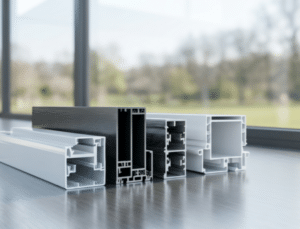
Industrial efficiency today is defined by a strategic choice: metal replacement. In the landscape of modern engineering, replacing metal with plastic is no longer just a cost-reduction tactic, but a sophisticated engineering move to enhance performance. Thanks to the extrusion of advanced high-performance polymers, it is now possible to produce components that are lighter, insulating, corrosion-resistant, anti-vibration, and capable of integrating functions that aluminum or steel could never offer in a single piece.
When does transitioning from metal to plastic truly pay off?
The question many clients ask is crucial: under what conditions does the shift to polymers generate a real competitive advantage? The answer lies not just in immediate savings, but in a combination of technical and economic factors that transform the extruded profile into a strategic asset. Here are the pillars of the Mavis advantage:
- Drastic Weight Reduction (up to 80%): Replacing aluminum or steel with high-performance polymers allows for radical component lightweighting.
- Superior Thermo-Electric Insulation: Plastic is an excellent natural insulator. This eliminates thermal bridges and ensures electrical safety without the need for additional sleeves or insulating inserts.
- Tribological Properties and Native Finish: Mavis extruded profiles come out of production already colored and finished throughout. This completely eliminates post-production stages like painting or anodizing. Furthermore, many polymers offer self-lubricating capabilities, ensuring lower friction and noise levels while eliminating the need for external greases.
- Life-Cycle Economic Efficiency: Although the raw material cost “per kg” of some technopolymers may be higher, real savings come from eliminating post-production processing (finishing, grinding), drastically reducing scrap, and lowering logistical costs.
- Design Freedom and Functional Integration: We can integrate fastening clips, channels, and gasket seats into a single profile, simplifying final assembly.
Economic Analysis: The “Break-Even Point” in Plastic Extrusion
A fundamental aspect to evaluate when replacing metal with plastic is production volume. Unlike aluminum, plastic extrusion requires more complex tooling, including air or water calibration systems to ensure dimensional stability.
- Small Batches (500-1,000 m): Aluminum can remain competitive due to lower initial die setup costs.
- High Volumes (10,000-20,000 m): Plastic is the clear winner. Tooling costs are amortized quickly, and the price per linear meter is reduced by approximately 30% compared to aluminum.
Challenges and Technical Constraints of Metal Replacement
Being a technical partner means knowing the limits of conversion. Transitioning from metal to plastic requires a conscious engineering approach:
- Thermal Limits: Even “super-polymers” have lower temperature limits than metals. Dimensional stability can decrease when the operating temperature approaches the material’s glass transition temperature.
- Hygroscopicity and Expansion: Some polymers absorb moisture, which can cause dimensional changes. Additionally, the coefficient of thermal expansion is generally higher than that of metals, requiring specific coupling tolerances.
- Material “Recipe” Complexity: Identifying the correct combination of polymers and reinforcements (glass fiber, carbon, etc.) for specific stresses requires high-level technical expertise. Even reinforced polymers rarely reach the absolute stiffness (elastic modulus) of steel or zinc alloy, making redesign essential.
REQUEST A TECHNICAL CONSULTATION
Feasibility Analysis and Co-Design: The Mavis Approach
Switching from metal to plastic does not mean replicating an existing geometry; it requires a profound engineering redesign. At Mavis, every Metal Replacement project begins with a rigorous feasibility study to ensure the profile maintains the necessary structural rigidity and long-term stability.
Our method is based on three fundamental pillars:
- Section Optimization: To compensate for the lower elastic modulus of polymers, our technicians intervene on the profile’s geometry. This includes strategic wall thickness increases and adding reinforcement ribs at critical points.
- Technical Couplings and Tolerances: We meticulously verify the interface between the extrusion and other components. We calculate material thermal shrinkage and potential hygroscopicity to ensure perfect fits and constant tolerances.
- Validation via 3D Prototyping: Our Co-Design process, supported by advanced CAD/CAM systems, analyzes mechanical stresses and chemical exposure. Before starting industrial tool production, we create rapid 3D printed prototypes (PLA), allowing the client to test fit and function in real-scale.
“Our integrated approach transforms complexity into industrial series: we reduce error margins and accelerate time-to-market, delivering a technical profile ready for global market challenges.”
Mavis Case Studies: Real Solutions for Critical Sectors
- Energy Efficiency in Refrigeration: We replaced aluminum uprights with insulating extruded profiles for a commercial refrigerator manufacturer (Reg. EU 2019/2024). Result: Total elimination of thermal bridges. Explore refrigeration profiles.
- Automotive Safety and Weight: Using UL94 certified technopolymers, we created self-extinguishing interior profiles, reducing weight by 60% compared to steel.
- Thermal Insulation in Construction: In line with UNI 11979:2025 standards, our recycled PVC sub-frames solve sheet metal corrosion issues while providing superior insulation and CAM compliance.
- Mechanical Sliding: We produce extruded guides in PTFE-additive PVC for self-lubricating sliding that reduces maintenance.
- Office Furniture Design: We replaced aluminum glass-mounting uprights with high-transparency PMMA (Acrylic) profiles. The result is continuous “all-glass” partitions with no visual interruptions, combining structural solidity with a minimalist aesthetic. Explore glass partition profiles.
Co-extrusion: Eliminating Vibration and Noise
Mavis excels in multi-material co-extrusion, combining rigid structural bases with soft TPV or TPE inserts. This technology allows for a profile that serves simultaneously as a support and an anti-vibration gasket, dampening acoustic resonances typical of metals and simplifying the assembly line.
Technical Comparison: Plastic Extrusion vs. Aluminum
| Technical Property | Aluminum (Extruded) | Mavis Technopolymers | Strategic Advantage |
|---|---|---|---|
| Density (g/cm³) | ~ 2.7 | ~ 0.9 – 1.5 | Up to 80% Lighter |
| Insulation | Conductive (Thermal Bridge) | Natural Insulator | Native Thermal Break |
| Process Temp. | 450°C – 550°C | 180°C – 250°C | >50% Energy Savings |
| Surface Finish | Requires Painting/Anodizing | Color-in-mass | Zero Post-Production Costs |
| Maintenance | Subject to Oxidation | Inert / Self-lubricating | Zero Maintenance |
| Break-even | Cost-effective for small lots | Unbeatable for high volumes | ~30% Lower Cost/Meter |
Strategic FAQ on Material Conversion
Is metal replacement safe for structural loads?
Yes, when the project is validated. By using glass-filled polymers, optimizing ribs, and increasing thicknesses, plastic’s resistance is sufficient for structural loads in many specific industrial applications.
How does plastic handle millimeter tolerances?
We operate according to the DIN 16941 standard. Thanks to our specialized calibration systems, we guarantee precise couplings that account for the polymer’s thermal expansion.
Is it possible to receive a prototype before production?
Certainly. Following the CAD phase, we create rapid PLA prototypes via 3D printing to test assembly and fit before final tooling investment.
Metal or Plastic: talk to the Experts
If you are debating the best material for your next project, leave nothing to chance. Tell us about your idea: our engineers will analyze loads, temperatures, and application environments to provide the most efficient solution. Call us at +39 0432 668877 or fill out the form below for a free quote.